Why Architecture Schools Still Teach Rendering Like It's 2015.
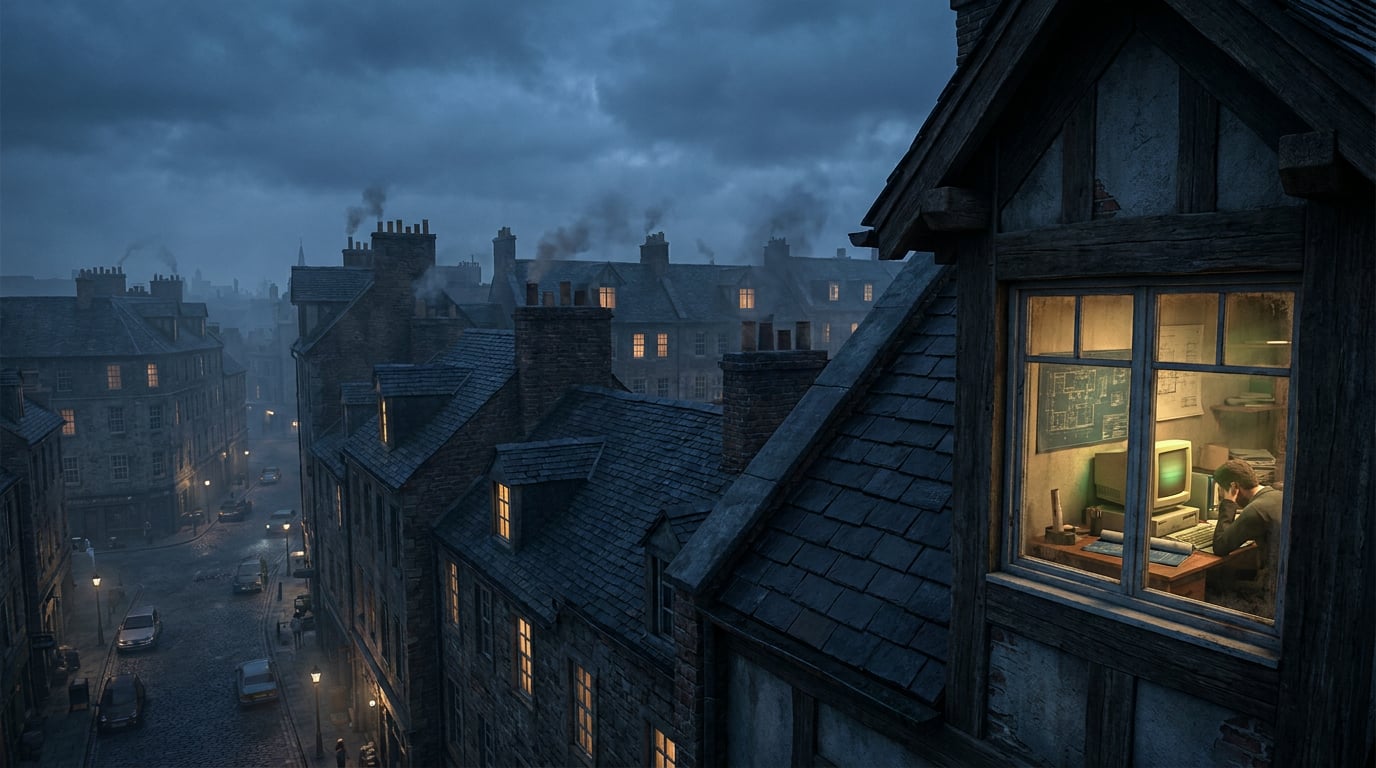
V-Ray tutorials and eight-hour renders still dominate the studio curriculum, while the tools practice actually uses have moved on. Here's the gap.
Walk into most first-year studio crits and you will find the same rendering pipeline that dominated 2015: model in SketchUp, apply materials by hand, drop it into V-Ray or Lumion, wait, adjust the sun, wait again, export one hero image the night before the pin-up. The workflow has barely moved in a decade. The profession around it has moved a great deal.
The curriculum froze around 2015, but the profession didn't
V-Ray and Lumion tutorials still anchor a lot of first-year studio teaching, largely unchanged from the versions taught ten years ago. That is a reasonable observation from anyone who has sat through a rendering module recently, though it is worth being honest that this is a pattern people report rather than a measured, sector-wide fact backed by curriculum audits across every school. What is easier to say with confidence is why the pattern would persist even if nobody intended it to.
The overnight render was a genuine constraint a decade ago. GPUs were slower, render engines were heavier, and a single high-quality frame at a decent resolution could tie up a machine for hours. Studio culture built itself around that constraint: submit the render job before you leave the studio, check it in the morning, and if the lighting was wrong, you lost another night. That constraint has mostly disappeared. The habits that grew up around it have not.
There is a cultural residue here too. Studios often reward the student who survived a painful pipeline (the one who fought a stubborn render engine until 3am and came out the other side with a usable image) rather than the student who explored six lighting scenarios in an afternoon and chose the one that actually sold the design. Struggle got mistaken for rigour. And tutors who trained a decade ago, quite reasonably, teach the tools they know well. That is not a criticism of any individual tutor. It is simply how curricula tend to lag behind practice, in architecture as in every other design discipline.
The overnight render was a real limitation once. Teaching students to work around a limitation that no longer exists is teaching them a habit, not a skill.
What's actually changed since 2015 that studio hasn't caught up with

The single biggest shift is that image generation is no longer tied to one renderer with one fixed engine. On a platform like ArchAdemia Tools, the Image studio puts generation across more than 20 models on a single surface, so a student is choosing an approach for a given image rather than committing to a single engine's strengths and quirks for an entire project. That is a genuinely different way of working than loading a scene into V-Ray and living with whatever that engine gives you.
Re-lighting used to mean going back into the scene, moving the sun, adjusting exposure, and rendering again overnight. Retouch's six one-click re-light presets (Golden hour, Dusk, Blue hour, Night, Overcast, Sunny) do that in seconds, generating the whole document at a different time of day or weather as a new layer. A student testing whether a courtyard scheme reads better at dusk or under overcast daylight can compare both without touching the original model.
Material and detail fixes used to mean hours of manual texture painting and post-production patchwork, especially on the parts of a render that came out soft or repetitive across a wide elevation. Material swap replaces a selected area's texture to match a reference image, landing as a toggleable layer rather than a baked-in change. Enhance Area re-renders a selected region at higher resolution with no prompt required, then composites it back through the selection, for exactly the wide render that has gone soft along one edge.
Perhaps the most significant change is conceptual rather than technical: a render used to be a locked final export. Once V-Ray finished, that image was done. Non-destructive, layer-based editing (masks, adjustment layers, six layer styles per layer) means a render in Retouch is a working file. You can come back to it, adjust the grade, swap a material, add a re-light pass, and none of it is destructive to what came before.
The old workflow treated a render as an ending. The current one treats it as a draft you keep working on. That single shift changes what a student should be taught to expect from the process.
Why this matters for the way students are assessed
Crits still tend to reward whoever turns up with the single most polished hero image, not whoever generated and tested the widest range of options. That grading instinct made sense when producing even one convincing render was a genuine achievement against the clock. It makes rather less sense now that generating variation is cheap.
If a student can produce six lighting or weather variants of the same scheme in an afternoon, without touching the underlying model, a crit built around "here is my one image" is testing the wrong thing. It should be testing judgement: why this reading of the scheme over the other five, and what does that choice say about how the design wants to be read. RIBA's own recent AI white paper notes that practices are already using AI tools for early-stage visualisation among other tasks, which suggests the profession itself is moving toward exactly this kind of option-generation workflow rather than a single polished output produced through one fixed pipeline.[15]
Portfolio and competition work is following the same logic. Boards built in Layout, on templates like the Competition Board or the Image-led Board, increasingly need to demonstrate range: several readings of a key view, a couple of material studies, evidence that the scheme was tested rather than rendered once and accepted. A competition board that shows one perfect image says less about a candidate's design thinking than one that shows the process of arriving at it.
| Old crit expectation | What the workflow now allows |
|---|---|
| One polished hero render | Multiple lighting and weather readings of the same scheme, generated in an afternoon |
| Reward for surviving a painful pipeline | Reward for design judgement across a range of options |
| Locked final export | A working file, editable non-destructively after the fact |
Students trained only on a fixed renderer, where every change means a rebuild and a re-render, arrive at practice unpractised in exactly the skill that gets asked of them in their first month: producing several credible options quickly, under time pressure, without the luxury of an overnight render cycle.
A crit that only ever sees one image per student is not testing design judgement. It is testing endurance.
What practice actually expects from a graduate today

Small practices generally need someone who can take a rough SketchUp or Linea massing model and turn it into a presentable image quickly. They do not need someone who can nurse a render farm through the night. That distinction matters more at small practice scale than anywhere else, because there usually isn't a dedicated visualiser on staff. The task falls to whoever is nearest the model.
Design and Access Statements and planning submissions are a good example of where speed and consistency beat one perfect hero shot. A planning package typically needs several views, often shown across different conditions and angles, produced with a consistent look across the set. RIBA's white paper specifically names compliance checking and specification writing among the tasks practices are already applying AI tools to, which points to a broader shift toward faster, more consistent output across the many small tasks a planning submission actually requires, rather than a single showpiece image.[15]
Knowing how to art-direct an image (choosing the camera angle, the lighting condition, the material palette, the entourage that sets the scale) matters more day to day than knowing one renderer's settings by heart. A junior who understands what makes a convincing planning visual, and can produce that quickly across multiple views, is more useful to a small practice than one who can operate a single piece of software expertly but slowly.
Practices increasingly expect drawing, modelling and rendering to function as one continuous workflow rather than three skills learned in three separate modules and never connected. A scheme moves from a Linea massing model, into an image or a re-light pass, onto a Layout sheet for the client meeting, and back again when the client asks for changes. Treating those as separate silos, the way a lot of studio teaching still does, produces graduates who can do each step well in isolation but struggle to move fluidly between them under deadline pressure.
Fast, consistent, and workable across a set of views beats one polished plate for almost everything a small practice actually submits.
How students can close the gap themselves

Waiting for a curriculum update is not a plan. There is a practical way to build the habits practice actually wants, without needing a school to change its module structure first.
- Push a massing model into image generation before committing to a fixed render setup. Take an untextured Linea or SketchUp massing model and run it through Image generation to test several material and lighting directions before locking a scene into one renderer's settings.
- Use re-light presets to test a scheme across a full day, not one moment. Retouch's Golden hour, Dusk, Blue hour, Night, Overcast and Sunny presets let you test a single scheme across six conditions without rebuilding the scene each time, then decide which reading actually communicates the design intent.
- Build a portfolio that shows range, not just polish. A Layout document built on the Portfolio or Project Book templates can hold iteration and process alongside the final image, giving a crit or a recruiter something to judge beyond a single flattering shot.
- Treat rendering as one stage in a longer workflow. Drawing in Linea, modelling the massing, generating and re-lighting the image, then presenting it in Layout is one continuous process. Learning it that way, rather than as three disconnected modules, is closer to how a small practice actually works.
None of this requires abandoning the fundamentals a rendering module teaches: composition, light, material honesty, scale. What it changes is the pace at which those fundamentals get tested and refined, and how many versions a student is expected to produce before settling on one.
The takeaway
The habits built around the overnight render made sense when the overnight render was unavoidable. It mostly isn't any more. Schools that keep teaching one renderer as if speed is still the scarce resource are training students for a constraint that has largely disappeared, while practice quietly moves toward valuing range, judgement and speed across a set of views. Students who build that muscle themselves, treating a render as a working file inside a continuous drawing-to-presentation workflow rather than a final locked export, will arrive at their first job already fluent in the way the work actually gets done.
Keep reading.

Try ArchAdemia Tools for yourself
Draw it, model it, render it, publish it. One place, built for architects and small practices. Plans from £29 a month, all in.