Why Architectural Visualisation Stayed Expensive, and What Changed.
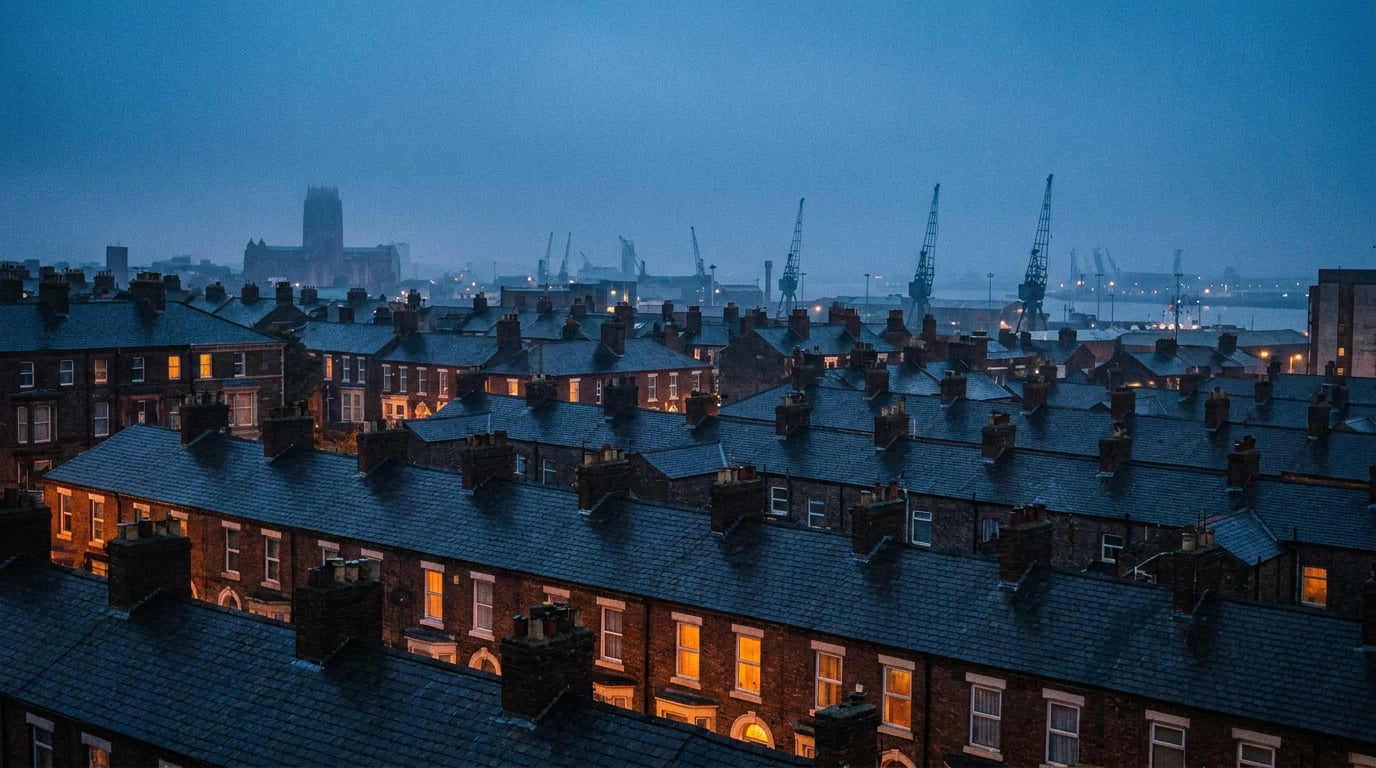
Rendering has priced out small practices for a decade. Here's why the old model broke, and what's actually different in the last two years.
The maths that kept small practices out
A single external render for a planning submission has routinely cost £800 to £2,000+ once revisions were factored in. That figure isn't a scare number; it's the visible tip of a cost stack that small practices rarely see broken down but always feel in the invoice.
Strip it back and a "hero image" bundles four separate costs. First, 3D modelling time: cleaning up an architect's SketchUp or Revit model, or rebuilding it entirely for the render engine. Second, render engine licences, sold per seat and often per machine, on top of the modelling software licence itself. Third, GPU and CPU hardware, whether a local multi-GPU workstation or paid time on a render farm to get a photoreal still back in hours rather than days. Fourth, the visualiser's day rate sitting over all of it, typically quoted at £80–£160 an hour for a senior operator.
Pricing surveys across the UK, US and EU markets put mainstream studio stills at $700–$1,500 for a high-quality exterior or interior in a major city, with high-end commercial or boutique work running $2,500–$5,000+ per still and $5,000–$20,000 per minute for animation. Budget or offshore studios undercut this at $150–$700, but few small UK practices have the project pipeline or the patience for the back-and-forth that offshore turnaround demands on a live planning deadline.
Faced with that maths, a sole practitioner or a two-person studio had two options. Absorb a fee they couldn't really justify to a residential client on a modest extension. Or do without, and present flat elevations and floor plans to a planning committee that a competing scheme was showing in a lit, dusk exterior render. Visualisation became a competitive advantage only practices with in-house teams or bigger marketing budgets could deploy at concept and planning stage, not just for the final marketing image at project completion.
The cost stack wasn't the render itself. It was modelling time, render engine licences, GPU hardware and a specialist's day rate, all bundled into one number that only made sense if you were producing images every week.

Why the software model made this worse, not better
Traditional render engines and 3D suites charge per seat, per machine, regardless of how often you actually render in a given month. That licensing model punishes exactly the practices it should be helping.
A sole practitioner submitting one planning application a quarter pays the same annual licence as a studio rendering daily for six live projects. The fixed cost doesn't flex downward for low usage. Industry cost guides are blunt about this: licences are treated as overhead, recovered through project fees, whether or not the seat was used that month.
The learning curve compounds the problem. Getting lighting, materials and camera composition to a standard you'd actually present to a client takes weeks of tutorials and false starts, not an afternoon. Until a practice clears that threshold, the licence is a sunk cost with no billable output attached to it, which is a bruising position for a one- or two-person studio trying to keep overheads lean.
Then there's subscription stacking. A render engine licence. A separate AI upscaler subscription. A separate video walkthrough tool. A separate stock asset library. Each billed monthly, each renewing on its own date, whether used that month or not. It's the same problem the streaming industry created for households, except here the "channels" are five different tools a practice needs to touch just to get one image out the door.
A practice generating four renders a year was paying full annual licence fees designed for a studio generating four hundred.
What actually changed: credits replace licences

The shift industry-wide since roughly 2024–25 has been from flat monthly licences to credit-based, pay-for-output models. Instead of buying capacity you may never use, you buy a pool of credits and spend them only when you actually generate something.
ArchAdemia Works is built on exactly this logic. Starter at £29 a month gives 3,000 credits. Pro at £49 a month gives 7,000. Max at £79 a month gives 16,000. A practice doing occasional planning visuals doesn't pay the same as a studio in daily production, because the cost now tracks actual output rather than seat count. If you generate three images a month, you spend three images' worth of credits. If you generate thirty, you spend thirty. The plan you choose reflects your volume, not a blanket assumption about how a studio operates.
The stacking problem drops away too. Image generation across 20+ models, video generation, and 3D model generation all draw from the same credit pool, rather than five separate subscriptions with five separate renewal dates and five separate learning curves. A practice testing a massing study in the 3D studio one week and a client-facing dusk exterior in Image the next isn't juggling logins and invoices for each.
Concurrency limits matter here too, and they're worth understanding rather than resenting. Starter allows 2 simultaneous generations, Pro allows 3, Max allows 4. That's not an arbitrary throttle: it means a sole practitioner isn't paying for render farm capacity they'll never realistically use, and it keeps the platform's GPU load manageable for everyone on it. A one-person studio doesn't need to generate eight views at once. It needs to generate the two or three it's actually reviewing with a client that afternoon.
The core change isn't that AI made rendering cheap. It's that credits replaced licences, so cost now tracks what you actually produce, not what capacity you might theoretically need.
The skill barrier dropped, not just the price
The old workflow ran like this: model in SketchUp or Revit, export to a dedicated render engine, rebuild materials because the export never carries them cleanly, set lights and cameras from scratch, queue the render, wait, review, revise, re-render. Each of those steps demanded a distinct skill set, closer to photography and cinematography than architecture, and most small practices never had anyone on staff who'd built that skill set.
The newer workflow compresses that chain. Instead of learning which render engine setting produces a convincing dusk shot, a practice can ask directly inside a project chat. Corb, ArchAdemia Works' assistant, helps pick the right generation model and settings for the brief, whether that's a soft daylight interior for a residential client or a dramatic dusk exterior for a planning committee, functioning as a creative director sitting inside the conversation rather than a separate manual to read.
Scene Composer takes this further for anyone working from an actual model. It lets a practice pose a 3D model against a generated backdrop using on-screen gizmos, then render straight to a photorealistic image, without a separate lighting rig, without a render farm queue. It's a desktop tool, so it needs a working machine to build in, but the technical overhead of the old render-engine relationship isn't there.
This matters most for Part I and Part II students building portfolio and competition boards, and for one- or two-person practices that never had a visualisation specialist on staff and never will. The skill that used to gate visualisation, knowing which render settings produce a presentable image, is no longer the bottleneck it once was.
The old bottleneck was knowing render engine settings well enough to get a presentable image out. That bottleneck is what's actually moved, not just the invoice at the end.
Where the cost still shows up (and where it doesn't yet disappear)

Honesty matters here. Complex, fully custom interior visualisation for a high-end client presentation still benefits from a skilled operator. Credits don't replace judgement on composition, on whether a material reads as honest stone rather than a plastic approximation, or on whether a camera angle actually tells the story a client needs to hear before they sign off a scheme. That kind of work still sits in the $2,800–$5,500+ per still range at the top end of the market, and AI hasn't materially disrupted that tier. What it's compressed is the early-stage and mid-range work, not the top of the market.
Building the work still happens at a desk: Composer for scene composition, Linea for the drawing and the model. What's changed is the client-facing half. Linea lets you import a GLB export of a scheme from SketchUp or Revit and drops you inside at eye level for a first-person walk with real collision. The client doesn't install anything: they open a shared /play link in any browser, on a laptop or a phone. That's a genuinely lighter footprint than scheduling a render review meeting around someone's desktop.
Trial access has real limits worth knowing before you rely on it for a live pitch. Watermarking and daily credit caps on free access mean a practice testing the waters isn't seeing final-quality, unmarked output until it's on a paid plan. That's not a complaint, it's just where the boundary sits, and it's worth building into how you plan a pitch timeline.
Frame this honestly: it's a genuine shift in where the money goes, not a disappearance of cost. Less goes on licences and idle capacity sitting unused most months. More goes on the credits actually spent producing something a client will see and respond to.
What this means for how small practices pitch work
Visualisation can now sit earlier in the process. Rough massing renders at concept stage, used to win a client conversation rather than only appearing as a polished image at the end to secure planning. That changes the shape of a fee proposal without necessarily changing the fee: a practice can credibly include exploratory stills and simple walkthroughs as part of the base design service, rather than quoting them as an expensive optional extra a client might decline.
A published walkthrough changes the meeting itself, not just the render. Instead of scheduling a review session around someone's desktop and a render engine viewport, a small practice can send a client a walk-through link they open on their own phone, in their own time, and respond to on their own schedule. For a family reviewing a house extension, or a small commercial client weighing up a fit-out, that's a materially different conversation to being talked through a still image over video call.
| Old model | What's changed |
|---|---|
| Flat annual render engine licence, used or not | Credit pool tracks actual output, from £29/mo |
| Separate subscriptions per tool (render, upscaler, walkthrough) | One credit pool across Image, Video, 3D |
| Visualisation as final deliverable | Visualisation as ongoing conversation tool |
| Render review meeting around a desktop | Shared /play link opened on a client's own device |
The practical takeaway: the practices winning work now aren't the ones with the biggest render farm. They're the ones treating visualisation as a conversation that runs through a project, concept sketch to options appraisal to planning submission, rather than a single expensive deliverable produced once, near the end, and hoped to be enough.
Keep reading.
Try ArchAdemia Tools for yourself
Draw it, model it, render it, publish it. One place, built for architects and small practices. Plans from £29 a month, all in.